
Want to have a more sustainable Christmas? It might be the most wonderful time of the year for many of us who celebrate Christmas, but it can also be incredibly wasteful. In my journey to live a more sustainable lifestyle, I have been looking for ways to have a more eco-friendly Christmas without feeling like Scrooge! So, check out my tips for celebrating Christmas sustainably.
Overall Considerations for an Eco-Friendly Christmas
Before we get into detail there are some overall themes to bear in mind every time you are making a decision about what to do to make Christmas more sustainable, and they are the same things to consider generally for an eco-friendly lifestyle.
Do You Need to Buy It?
It is very easy to overindulge at Christmas, with food, decorations and gifts. Christmas is a reason to celebrate, but try not to go over the top, and think about whether you really need these things. Perhaps just spending time with loved ones is more important than the lavish decorations and huge buffet lunch.
That’s not to say you have to do without your favourite foods or gifts, you can still have a sustainable Christmas by making more eco-friendly choices without missing out.

Can You Reuse It?
So many Christmas decorations and wrapping paper get thrown away immediately after the celebrations are over, so look for sturdy, reusable items that you can make use of every year, or for some other purpose.
Will You Commit?
Commitment is a big part of the change to a more eco-friendly life. Those who made Christmas a tradition how hundreds of years ago surely put effort into making sure this holiday will be celebrated annually – everywhere in the world.
Sit down, have some tea (and cookies!), and think about why you want to take this step, and why you want to change the way you celebrate Christmas. What are the pros and cons, and what will it bring to you, your family, and your lifestyle?
Personally, when I made the decision to have a more eco-friendly Christmas, I knew that I didn’t want to give up celebrating Christmas as I always look forward to it. However, at the same time, I know I have a responsibility to save our planet.
By choosing a more sustainable Christmas I’m doing my part in tackling climate change, and I’m reducing the waste I throw out, while creating new Christmas traditions with my family.
The pros just outweigh the cons so much more. Switching to an Eco-friendly Christmas celebration doesn’t mean I had to give it up completely – I just need to be more conscious about my decisions.
The next step is to speak to your family members, and help them understand why this means a lot to you and how it doesn’t mean “Christmas is ruined”. We’re not ruining anything, if anything, we’re making this holiday even better without contributing to the destruction of the planet.
We’re making sure this holiday is sustainable, so we can keep celebrating it every year.
Letting your family know about this new tradition also gives you a chance to have someone to hold you accountable. Someone who will tell you when you are making a mistake and to some up with sustainable ideas together, like all sharing the same reusable wrapping paper.
The first time having a sustainable Christmas might not be easy, but it will be worth it! There’s a lot of learning to do, but having someone help you will make it a much more comfortable and great way to communicate with your family better.
How to Celebrate an Eco-Friendly Christmas
There are many changes we can make to how we celebrate Christmas that will make it more sustainable and kinder to the environment. Let’s go through each aspect of Christmas celebrations to see what we can do:
Sustainable Christmas Trees
I love a good Christmas tree as much as the next person but how do you know which kind of Christmas tree is most sustainable?
Real Christmas Trees
Many people will argue that having a real Christmas tree is the best option since they are planted explicitly for this purpose so it is not causing deforestation. Having a real tree feels more eco-friendly than a plastic tree, however, when the tree turns brown and dies those trees are usually being dumped instead of being recycled.
Rent a Christmas Tree
One option is to rent a Christmas tree for the festive period and then return it afterwards. You order the tree you want, it will be delivered to your house in its own pot with roots, then you can decorate it and must care for it during Christmas.
Then in the New Year, the tree will be picked up and replanted, and hopefully will survive until next year when you can do the same all over again. You can choose different sizes to suit the room and space you have available and don’t have to spend time dragging the tree home which is a big bonus!

Fake Christmas Trees
Another option is to reuse a fake plastic tree every year so you are not cutting down or damaging any real trees. It is estimated that you need to use a fake plastic Christmas trees (plastic) for at least 20 years to make it a greener option, but then, you must find a place that can recycle your disregarded tree after.
Now, which Christmas tree is more Eco-friendly?
If you really want a real tree, make sure you find a place where you send it after and they will recycle it for you. Renting a tree is also not a bad idea and seems a much easier arrangement. While Fake trees are only recommended for those who live in places where real Christmas trees are not available (for example tropical countries).
Sustainable Christmas Decorations
After the tree, next to discuss are the Christmas decorations. Instead of using traditional plastic-made decorations and accessories, why don’t you switch to a greener option for a more sustainable Christmas?
The key things to look for here are the material decorations are made from and if they can be re-used and recycled once you’ve got as much use out of them as possible.
Wooden decorations sourced from sustainable forests are a better choice than plastic decorations.
You could bake Christmas cookies to hang on the tree and eat them after Christmas – remember to save the string to reuse again next year.
For example, on the Christmas tree, you can hang family heirlooms instead, which are very popular right now. On the other hand, many families would hang family photos instead of shiny balls and tinsel.
For Christmas lights, use led lights instead. For candles, choose Eco-friendly soy or beeswax candles. You can also bring inside your small potted plants, place them by the windowsill, and put some decorations on them.
Sustainable Christmas Gifts
Now to the big thing – Christmas gifts! There are two ways I want to discuss this topic; what to buy and what not to buy.
Many of us are looking forward to this holiday because it’s the time when we can ask our parents for that gadget we’ve been drooling over. However, some people go way over the top with gifts, buying things just for the sake of it that either are unwanted or will find their way to the back of the cupboard gathering dust.
One or two well-chosen thoughtful gifts are more meaningful than bag loads of crap.
If you’re buying sustainable Christmas gifts for kids, I recommend you speak to your children before they make their Christmas list, and explain to them things to remember and how to spot the more eco-friendly gifts.
What to Buy
First of all, consider items that are eco-friendly already, such as solar power phone chargers, reusable to-go utensils, recycled flip-flops, cruelty-free make-up, bamboo dinner set, reusable silicone lids and food wrappers.
If there’s something that you really need that you can only ask during Christmas, that’s fine. Just make sure that this is something you will be using often and for a long time.
Most importantly, always check if the gift/s you have on your list are available in recycled materials, vegan, cruelty-free or are available second-hand.
If you ask for an upgrade, take a look if you can donate or sell the lower version you have instead of keeping it to rot away or throwing it for no reason. Even if something is broken there might be someone out there willing to fix it.
Consider Making Gifts
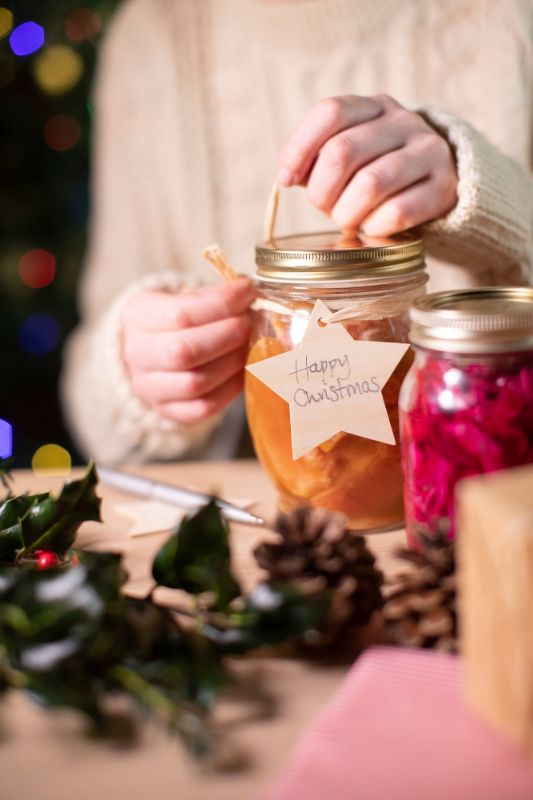
Instead of buying gifts, is there something you can make as a gift? If you’re handy in the kitchen some homemade cookies, jams or cakes could be lovely sustainable Christmas gifts.
If you can sew, how about making some clothes or hand-stitching a plain item with personal decoration? Get the kids involved with making gifts for their friends and relatives too.
What Not to Buy
Avoid asking for gifts just because we can, and equally avoid buying gifts just because it is something to buy. We want to prevent buying presents that are not recyclable or not durable enough that you will have to throw it only after a few use.
Once you have chosen something you really want, remember that it a two-way street. Buy a new item and at the same time, donate something you don’t need or use anymore instead of throwing them.
Eco-Friendly Gift Wrap
Gift wrap and wrapping paper is one of the most wasteful parts of Christmas, with the vast majority of gift wrap going straight in the trash as soon as we’ve opened our gifts. But there’s a solution to this – you can actually make your gift wrapping sustainable. Here are the options for eco-friendly wrapping paper:
Reusable Wrapping
Instead of using flimsy paper wrapping that is thrown away, reusable wrappers are often made of recycled paper or fabric. At the same time, these wrappers should also be thick enough, so your receiver can use them next year.
Many bookstores will tell you if they sell reusable gift wrappers or you can find various options online. If you do choose wrapping paper, make sure it is made from recycled paper in the first place!

Paper bags
Paper bags are probably my go-to gift wrapper. You simply had to place the gift inside, staple or tape the opening, and you have it ready! But remember, don’t use paper bags that have a plastic coating, get a simple paper that is 100% made of paper – also, avoid the ones with ink on them. Because these papers with ink are almost impossible to be recycled – unless it says that it’s 100% recyclable.
Recycled wrappers
Again, many gift shops and bookstores sell recycled gift wrappers. However, remember to choose the ones without colour, plastic coating, or ink in it (but some ink printed on paper are also recyclable, make sure to look for those). The easiest way to test if the material is recyclable is to scrunch it and then let it go. If it unfolds on itself, it’s not recyclable, but if it stays scrunched, it means you can recycle them.
A Gift within a Gift
Another option is to give a gift in a reusable cotton tote bag or wrapped in a cute tea-towel, so that the recipient not only gets to keep the gift but also the wrapping too!
More Tips for Sustainable Gift Wrap
Use a wrapper with a design that fits many holidays. For example, don’t get the ones that say Merry Christmas or have Rudolf everywhere, get a simple polka dot-design or geometric shapes and patterns that can be used for multiple occasions.
It is also vital that you don’t wrap your gifts too tightly or so complicated that the receiver will have to tear them up just to open the present. You can include a note on how to quickly open the gift wrapper and remind them to use it next year.
If your gift has some fragile items in it, use newspaper instead of bubble wrap to reduce plastic waste.
Reusable Christmas Advent Calendar
This actually an easy idea, especially if you are a crafty person! If you have kids you can make a fun project with them where they make their own reusable advent calendar on those rainy winter evenings! Many videos on YouTube will guide you on how to make a DIY Christmas advent that you can use every year.
If you already have one from last year, you can also reuse this instead.
When making a reusable Christmas advent calendar, remember to make the spaces big enough so you can put different things in them instead of having to choose the same stuff every year. You can even make one for your pet, your kids, grandparents, etc and let them know that they can use it next year.
Sustainable Christmas Cards
Many people these days avoid sending Christmas cards, instead either sending Christmas e-Cards or donating money to charity in place of buying cards.
However, if you do prefer to send physical cards, make sure you choose cards that are made from recycled materials and that can also be recycled themselves. Designs with glitter on cannot be recycled so avoid those.
Now here’s some trivia, do you know that there are Christmas cards that you can plant? Yep! How cool is that? When you send this Christmas card, make sure to mention to your receiver that this card can be planted and be sow in spring! No need to throw away cards.
For cards that you receive, use them as decorations when you receive them, hanging them on a piece of string to decorate the house. Then cut out the designs to re-use next year as gift tags or sustainable Christmas tree decorations. Recycle the remaining card.
Sustainable Christmas Food
Everyone’s favourite – food! Christmas is a time of year when people overindulge and over-buy, with a vast amount of food going to waste. However, with a bit of thought there are many things you can do to control your food waste during this holiday.
Control the Food Amount
Planning the amount of food is tricky, especially when you are expecting guests, however, reducing your food waste is still possible.
When you are hosting a big family gathering there is a lot of pressure to make sure that no-one goes away hungry, but don’t worry – you are feeding your family, not an entire army! If people are still hungry after, let them make a quick sandwich, and they will be fine!
Where to Buy Your Food and Drinks
This is a simple thing, but it makes a lot of positive impacts. This year, buy your food and drinks at organic shops or in the organic section at the supermarket. Not only you are doing the planet a favour, but you are also feeding your family and yourself food and drinks that are healthier and without toxic chemicals.
Plan What to do with Leftovers
On Boxing Day our family always has the same thing we had on Christmas Day to use up the leftovers. Then turkey sandwiches or turkey and chips or a turkey curry the next day. And then a broth made with the turkey carcass topped up with leftover veggies and some suet dumplings.
Actually these days with my Mum & Dad we usually have a chicken instead of turkey if it’s just for 3 of us as a turkey is too big! But you get the idea.
Prepare Doggie Bags
If you have guests coming for Christmas dinner and there are leftovers that you won’t finish yourself, send some home with your guests – in reusable tubs of course!
You can also donate excess food to homeless shelters or animal rescue centres, or share them around your neighbours – just don’t let it go to waste!
Freeze Leftovers
With food that can freeze (that hasn’t been frozen before), pop leftovers in the freezer. Did you know that you can freeze Christmas cake, dairy products like milk and cheese and cooked vegetables?
Final Thoughts on a Sustainable Christmas
Of course, you don’t have to stop celebrating Christmas. Just like everything in our daily life, we should be more mindful of our impact on Earth by deciding to live a more sustainable lifestyle – be it during the weekly grocery run or a big holiday like Christmas.
Here at How to Be Eco-Friendly, I love seeing readers make the lifestyle change and be able to keep it keep up, so if you’ve had a more sustainable Christmas then please let me know! If you have more tips for how to have an eco-friendly Christmas, leave a comment below and I’ll include it in the article.